Next decade must make automotive sector stronger through disruption: Maruti Suzuki MD
Addressing industry executives at the 66th ACMA Annual Session on Wednesday, Hisashi Takeuchi, MD & CEO, Maruti Suzuki India stated that the next decade must help the auto sector become stronger because of disruption.
ANI
Sep 02, 2026 12:33 IST

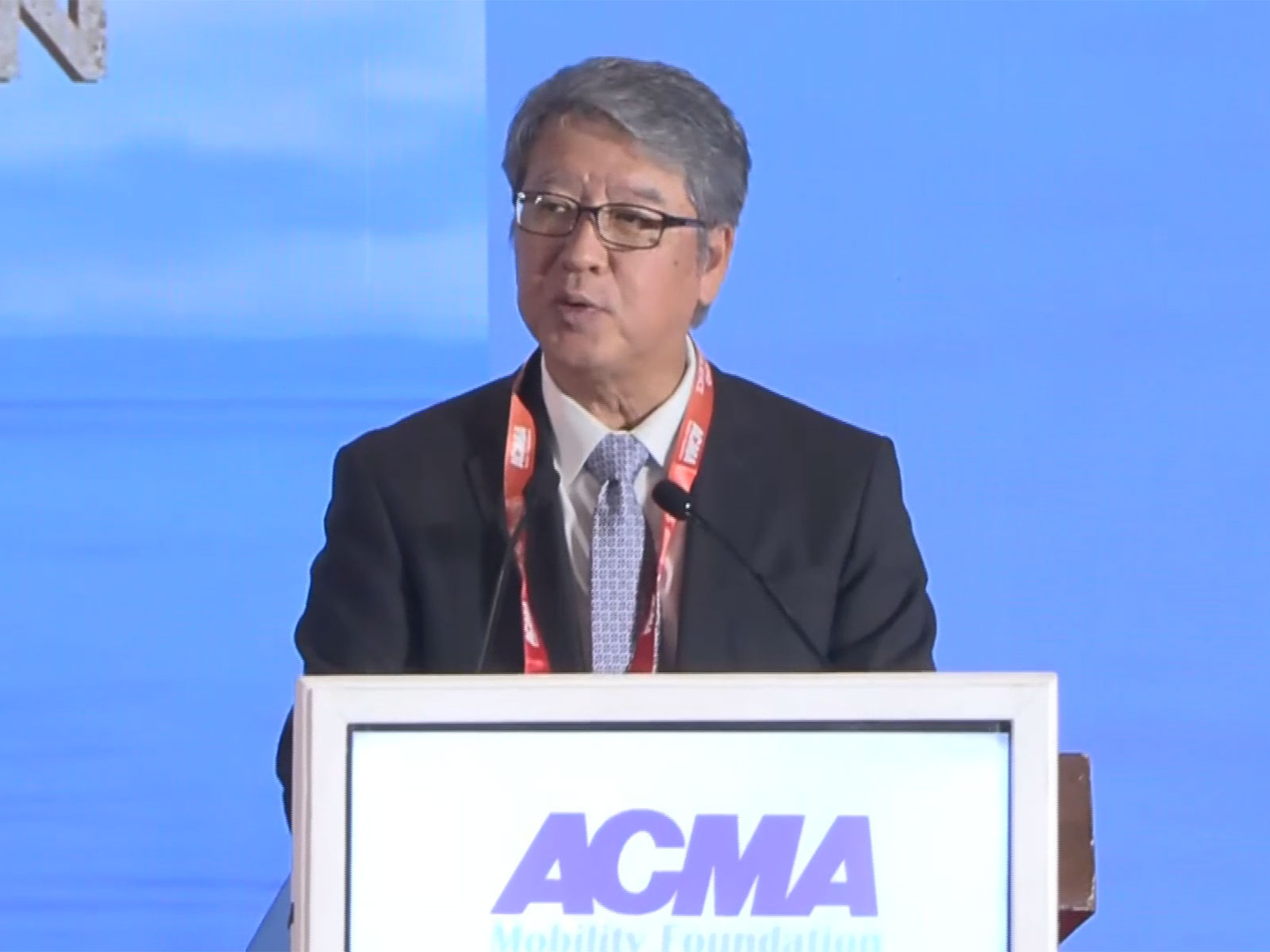
New Delhi [India], September 2 (ANI): Addressing industry executives at the 66th ACMA Annual Session on Wednesday, Hisashi Takeuchi, MD & CEO, Maruti Suzuki India stated that the next decade must help the auto sector become stronger because of disruption.
Takeuchi stated that after navigating semiconductor shortages, geopolitical conflicts, and supply chain uncertainties, the automotive industry proved its resilience but now needed to move past it.
"The last decade taught us how to withstand disruption. The next decade must help us become stronger because of disruption," Takeuchi said.
Drawing on author Nassim Nicholas Taleb's concept of antifragility, Takeuchi observed that while a fragile system broke under stress and a resilient system survived it, an antifragile structure gained strength from stress. To guide the automotive industry in that direction, he identified four enablers: deep localisation, people, collective learning, and technology.
Discussing deep localisation, Takeuchi explained that global supply chain reconfigurations and government backing created conditions to expand domestic production capabilities. He pointed to the Production Linked Incentive (PLI) scheme, the India Semiconductor Mission, and market momentum under GST 2.0 as clear growth drivers. However, he noted that localisation required raising standards across all tiers of component manufacturing.
"Competitiveness is not an individual company phenomenon. It is an ecosystem phenomenon," Takeuchi said.
"Unless our Tier-2 and Tier-3 suppliers are capable, we can't produce world-class quality," he added. "Supporting them through technology, quality systems, and engineering capability will be critical for long-term competitiveness. Equally important is improving communication across the ecosystem so that, in times of disruption, each stakeholder can respond with speed, coordination, and agility."
On the subject of human capital, Takeuchi called for a shift in perspective regarding workforce development.
"We should view people as assets on the balance sheet," Takeuchi said. "The moment this mindset changes, our approach to capability development also changes. Capability development should no longer be seen as a cost. It is an investment which eventually becomes a source of competitive advantage."
Takeuchi identified collective learning as another key operational pillar, noting that Maruti Suzuki introduced a Digital Library initiative to share case studies and best practices across suppliers. On technology, he explained that digital tools enabled manufacturers to anticipate rather than react to bottlenecks, citing Maruti Suzuki's use of supplier geo-mapping paired with localised weather intelligence.
"The objective is not to predict every disruption. That is impossible. The objective is to identify risks early enough to take counter measures," Takeuchi said.
He added that increasing digitalisation required equal attention to cybersecurity, urging companies to maintain contingency plans that enable rapid operational recovery following potential incidents. (ANI)
Tags:
Get the App