 हिंदी खबर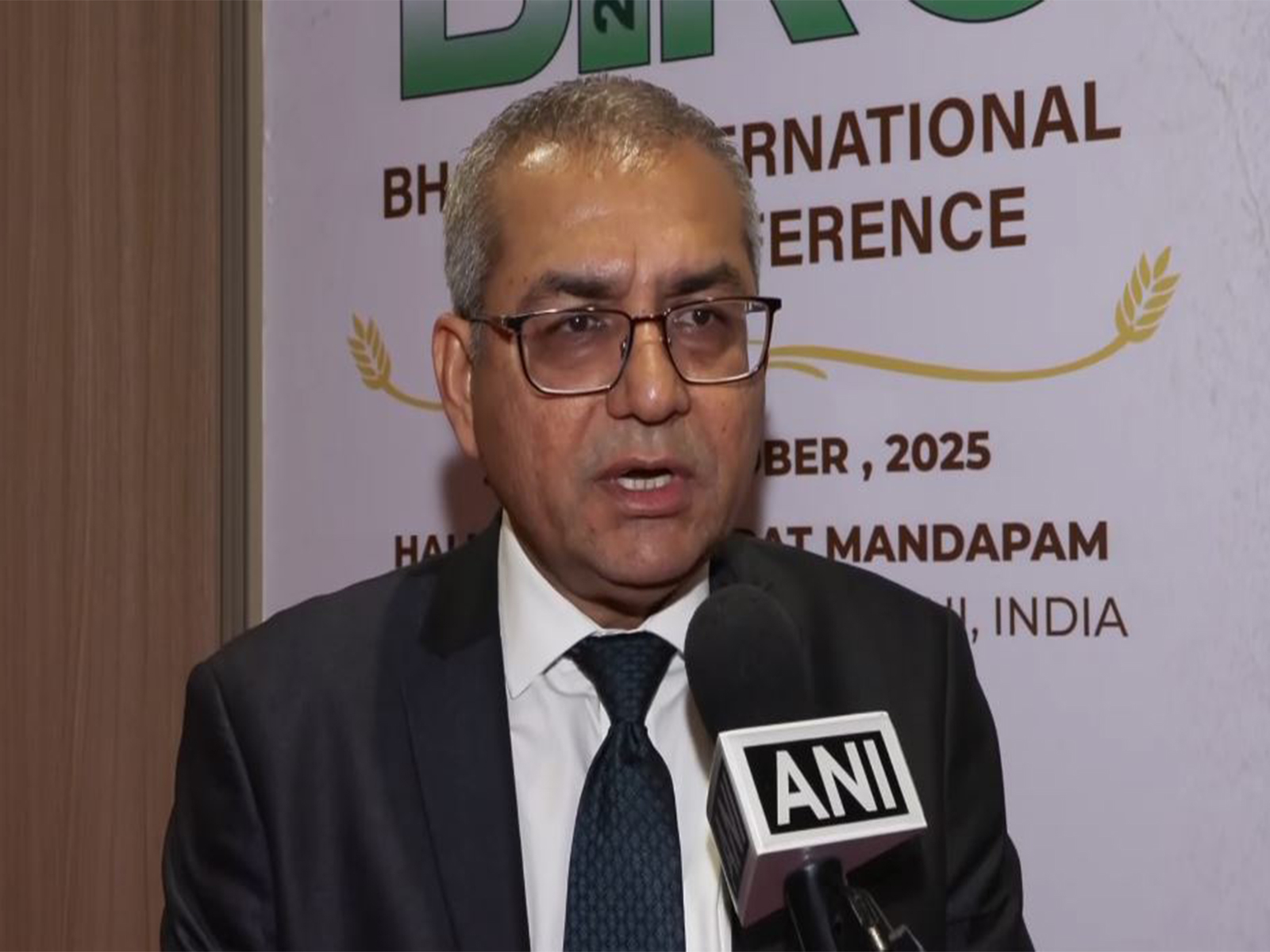

New Delhi [India], October 30 (ANI): India's agriculture sector is witnessing a transition toward sustainable and climate-resilient practices, said Sanjay Sethi, National Technical Coordinator at the Food and Agriculture Organisation (FAO) of the United Nations.
Sethi emphasised that the adoption of integrated nutrient management, integrated pest management, and climate-resilient technologies is helping farmers reduce chemical dependency while maintaining productivity and profitability.
"So when we do integrated nutrient management and when we do integrated pest management, when we take care of kind of cultural practices, mechanization, and ensuring that the farmers have the right kind of knowledge--it is possible to do the cultivation with less chemicals and with more climate-resilient technologies, ensuring that the productivity, and the income as well as the sustainability parameters are all kept in optimum equilibrium," Sethi said, talking to ANI on the sidelines of the Bharat International Rice Conference 2025.
Sethi noted that agricultural production in India continues to rise, with farmers increasingly adopting sustainability-linked and climate-resilient practices.
"We see that the agriculture production in India has been going up, and over a period of time, farmers are adopting sustainability-linked practices and they are also adopting climate-resilient technologies," he said.
He also pointed out that the government's financial support and incentives--especially for methods like Direct Seeding of Rice (DSR)--are helping farmers diversify into more climate-resilient crops.
"We have also seen that the government has put some money on the table. Diversification to other crops which are more privately resilient from the point of view of crop rotation as well as from the point of view of better technologies--for example, in case of DSR there are incentives by the farmers by the government. So all those things are already happening, and as a result, the food that we eat now is going to be safer and safer by the day," Sethi said.
Sethi elaborated that technological integration in farming, such as DSR, seed treatments, and bio-fertilisers, ensures that food becomes healthier and closer to organic standards.
"For example, when we do the DSR--Direct Seeding of Rice--it ensures that we have provided all the kinds of right climate-resilient operations into this. There are numerous other seed treatments and technologies, as well as integrated nutrient management with biofertilizers. All those technologies are deployed to ensure that our food, which we get, has less chemicals and the bioavailability of the micronutrients is better. And when that happens, the food is actually almost as organic as the organic food," he said.
Sethi emphasised that farmer education and awareness are crucial to ensure the effective application of new technologies.
"When farmers do certain activities, if they have not been given the right kind of knowledge around this--that DSR is suitable for certain kinds of soils, or it has to be done in a particular way--and because of some reasons or because of some climate reasons, if they don't get the right kind of output, sometimes they panic and they feel that this technology doesn't work," he explained.
He added that successful adoption grows gradually, as farmers observe positive results from peers in nearby villages.
"There are farmers in the same village or the neighbouring village already doing it for many years. So this belief comes slowly-slowly, and that's why you have seen India has progressed so much agriculturally over a period of time."
Sethi emphasised that while agricultural extension work has significantly improved productivity, the focus is now on reducing chemical use and enhancing efficiency.
"All these extension works that we talked about, it has worked over a period of time--that's why agriculture today is better than agriculture yesterday. But in the process, we have also seen that sometimes the chemical uptake has gone up," he said.
He added that agricultural professionals across the country are now working together to strike a balance between productivity and sustainability.
"We are ensuring that the optimum utilisation of fertilisers, reduced use of chemicals for the pesticide is there, without compromising on productivity, without compromising on production, without compromising on the sustainability parameters--so that we have less emissions, we have less water consumption, and yet farmers' profit is not reduced," Sethi said. (ANI)


