 हिंदी खबर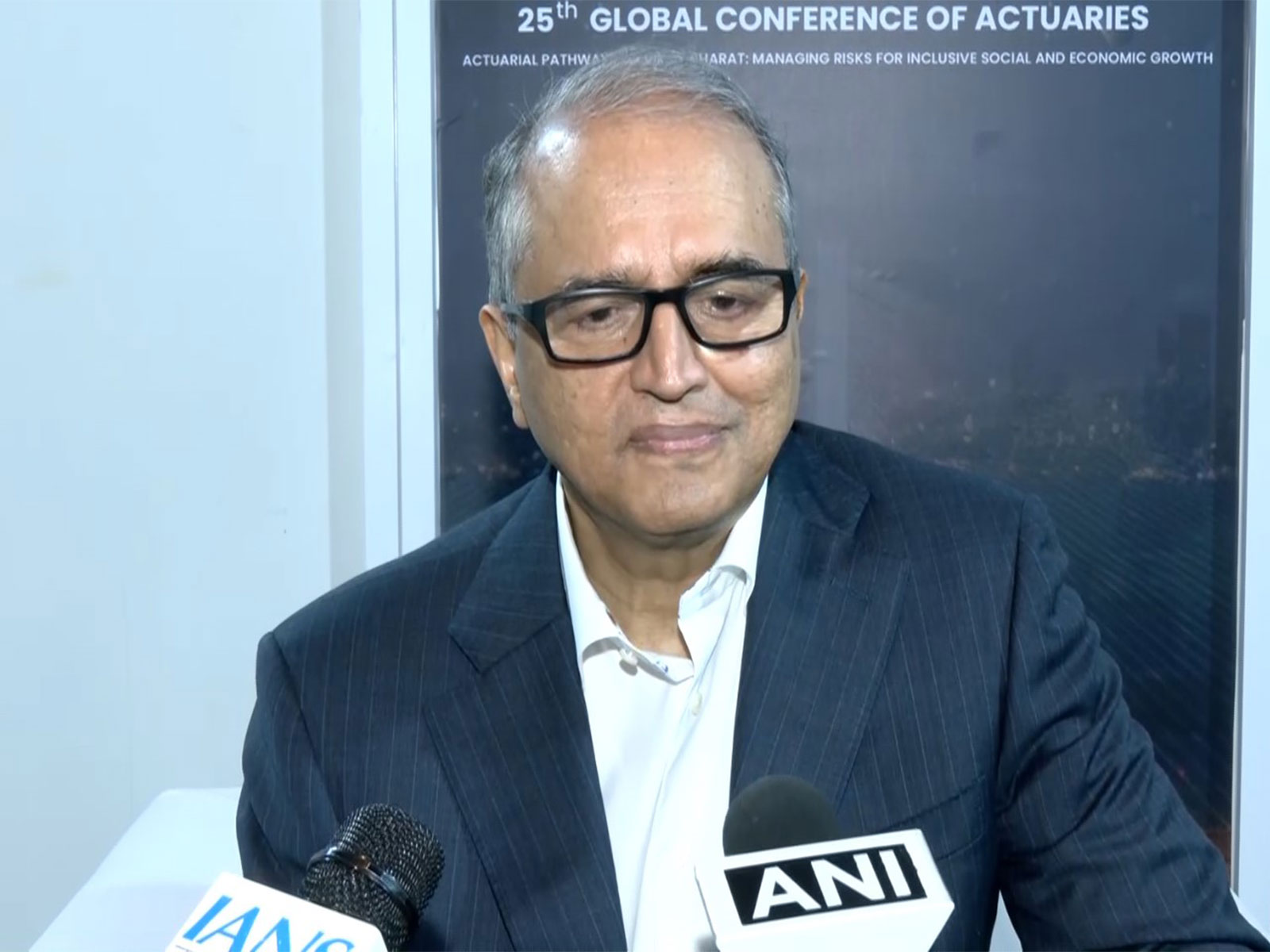

Mumbai (Maharashtra) [India], February 22 (ANI): India is on track to become the first country in the world to decouple healthcare from wealth, says Dr Devi Prasad Shetty, Chairman and Founder of Narayana Health.
While speaking on the sidelines of the 25th Global Conference of Actuaries at BKC, Dr Shetty predicted this shift will occur within the next five to seven years.
Dr Shetty emphasised that the quality of medical treatment in India will soon be independent of a citizen's financial status. He noted that the country has already increased the number of doctors and hospital beds significantly.
"India will become the first country in the world to dissociate healthcare from wealth. India will prove to the world that the wealth of the nation or wealth of the family has nothing to do with the quality of healthcare its citizens will enjoy. And India is going to do it within the next five to seven years. because we have now virtually triple the number of doctors who are getting trained. We have an adequate number of beds. The only missing link is 70 % of the people may not have the cash money to pay for the health care with various government schemes as well as the private health insurance. Believe me, in the next five to six years, seven years time, everyone will have adequate coverage to enter a corporate hospital or a government hospital for the care. This is going to happen very very soon."
Addressing concerns regarding technology in the operating room, Dr Shetty clarified that Artificial Intelligence is a tool for productivity and safety rather than a replacement for human surgeons.
"The AI will not make doctors redundant. AI will make doctors safer for the patient. AI will improve the productivity of doctors. A dermatologist who will otherwise take care of maybe 3,000, 5,000 patients with the AI assistance, he may be able to take care of 30,000 people. So AI will only make doctors more productive and health care safer for the patient," he said.
Dr Shetty also proposed a hybrid healthcare model. While government hospitals and insurance schemes are necessary for the poor, he suggested that a paid universal insurance model is essential to manage the patient load. He highlighted Health Savings Accounts as a solution for the middle class.
"We need both models. People who cannot afford any money to go to the private hospital need the government hospital and the government insurance schemes are doing a great job But at the same time we cannot fill the government hospital with too many patients So there is a need for alternative treatment for people who can pay at least some premium like as low as three thousand five hundred rupees per year Which may cover them up to three lakh rupees in a private hospital and this is possible and thanks to government, today We have what is called the health savings account. Health savings account is nothing but a zero balance account. Whatever money is deposited in that account can be used only for buying the health insurance. And with 3,500 rupees, if you get a coverage up to 3 lakh rupees, most families, 70 % of the families can be protected," Dr Shetty said.
In comparing India to developed nations, Dr Shetty remarked that India's lack of waiting lists for critical diagnostics like CT scans and MRIs puts it in a privileged position despite current challenges.
"Every country in the world, including United States, England, European countries are struggling to offer health care. The crisis in those countries are not much better than what we are having. So the India is very, very, very privileged, mainly because in a matter of time, every Indian will have a health insurance, and that will dramatically transform the way health care is delivered."
He further added, "Today, if you look at the waiting list in most of the developed countries, it is huge whereas in India The government hospitals are there, private hospitals are there, you need a CT scan, you need an MRI, there is no waiting list. Maybe it costs you money, but how much it costs? A thousand rupees, two thousand rupees? Even if you pay two thousand, three thousand dollars in those countries, they can't afford to walk into a CT scan room and get their CT scan done. So people in India are better off than what other parts of the world is, but I understand that everyone should be covered for walking into any... hospital of their choice and get the treatment done with the huge growth of health insurance, what is happening is going to happen." (ANI)
India will become first country in world to dissociate healthcare from wealth, says Dr Devi Prasad Shetty
ANI | Updated: Feb 22, 2026 14:11 IST


