India should localise existing LLMs instead of building expensive foundational models: Capria Ventures' Will Poole
India should focus on adapting and localising existing large language models (LLMs) to suit its linguistic and cultural needs rather than investing heavily in building expensive foundational models from scratch, Will Poole, Co-Founder and Managing Partner of Capria Ventures, USA, told ANI on Wednesday.
ANI
Jun 10, 2026 18:51 IST

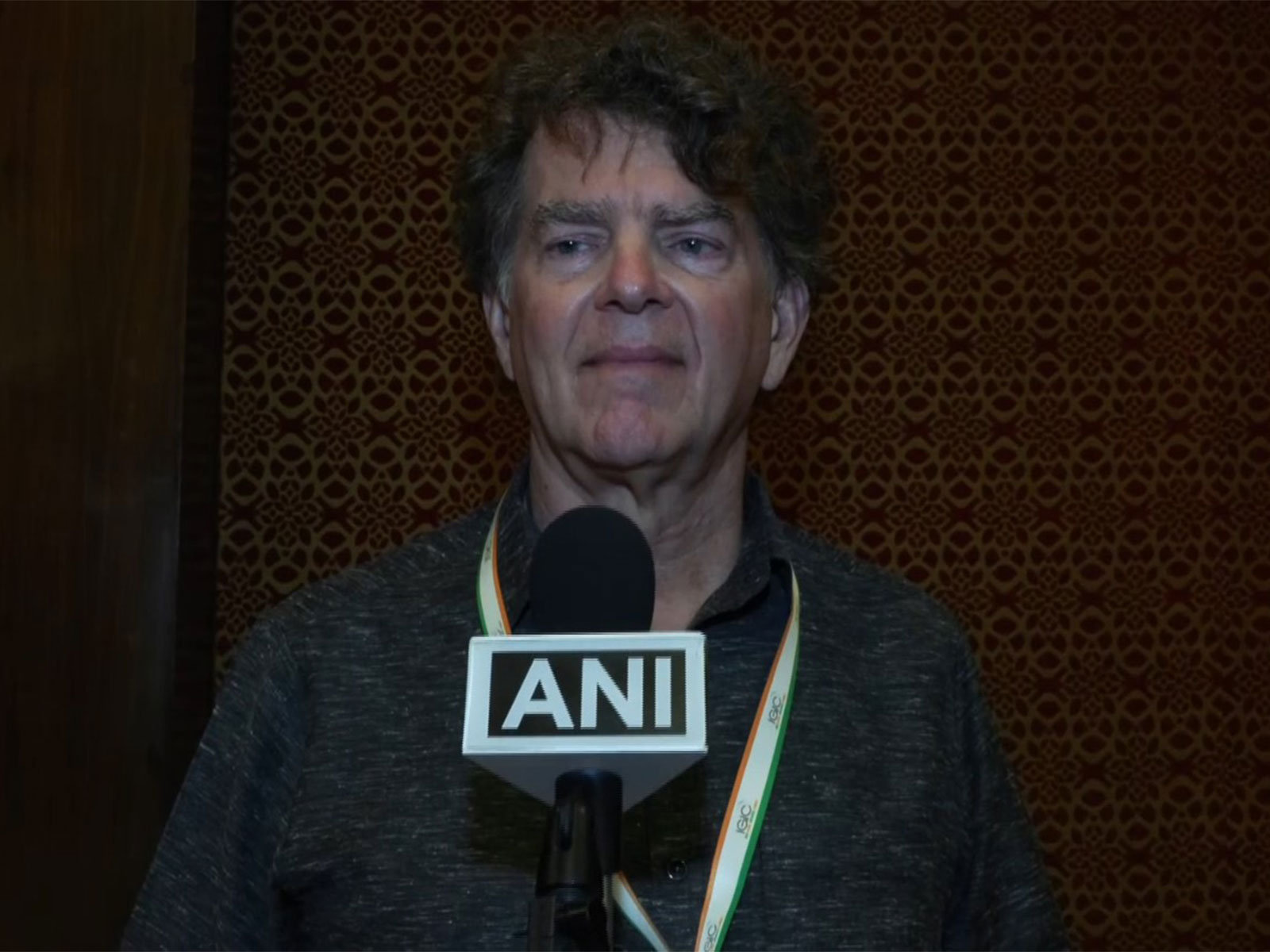
New Delhi [India], June 10 (ANI): India should focus on adapting and localising existing large language models (LLMs) to suit its linguistic and cultural needs rather than investing heavily in building expensive foundational models from scratch, Will Poole, Co-Founder and Managing Partner of Capria Ventures, USA, told ANI on Wednesday.
"I actually think that's a fine thing. I think India should ride on the LLMs created by others and then customise them, personalise them, adapt them, localise them, all the things that are needed to fit the Indian language context and cultural context," Poole told ANI in an exclusive interview on Wednesday.
While speaking on the sidelines of the 5th meeting of the India Global Innovation Connect, Poole said India's biggest opportunity in artificial intelligence (AI) lies in customisation, localisation and application of existing models rather than competing in the costly race to develop frontier AI models.
"That's heavy lifting. That's actually being done by a couple of innovative companies here already, and it'll be done by more. I think that's really where the value is. The value is not in the creation of the commoditised, expensive LLM underneath," he added.
Poole said AI presents both opportunities and challenges, noting that a growing public discussion around the technology's impact on jobs is a positive development. According to him, the debate over whether AI will create or destroy jobs often misses the fact that it is likely to do both.
"There are both reasons for optimism as well as reasons for concern," he said. "People are really getting focused on the jobs issue and having a public debate around whether AI will create or destroy jobs. And the answer is ultimately both."
At the same time, he cautioned against what he described as a growing distrust of AI among younger generations, warning that those who fail to embrace the technology could find themselves at a disadvantage in the future workforce.
On India's position in the global AI landscape, Poole said the country's greatest strength is its large and youthful workforce, coupled with increasing adoption of AI by businesses and corporate leaders.
"I think India's advantage is having 1.4 billion people and the youngest workforce on the planet, and they will continue to grow," he said. "That workforce starting to embrace AI and the corporate leaders here embracing AI, that together is power."
He also pointed to significant opportunities for Indian startups in developing industry-specific AI applications, commonly referred to as vertical AI.
"I think people are seeing this broadly based consumer product like ChatGPT and trying to apply this to very complex enterprise needs and find it doesn't work that well. So that creates an opportunity for innovation," he said.
"Building AIs that are specifically tuned to the needs of specific enterprise workloads... it's called vertical AI. That's both a challenge and an opportunity that we're excited about," he added.
Commenting on India's growing data centre ecosystem, Poole said sustainability considerations must remain central to future expansion plans.
"The data center question is a big and important one because it involves power, involves water," he said, adding that policymakers and industry stakeholders should consider measures to manage water consumption and encourage greater use of independent and renewable power sources.
On regulation, Poole said India has so far taken a measured approach to AI governance and should continue to strike a balance between innovation and oversight. He suggested that areas such as privacy, data sovereignty and responsible use of AI are appropriate subjects for regulation, provided innovation is not unnecessarily constrained.
"If you can do regulation and innovation, that's what you really do well," he said.
Poole also said Capria Ventures remains focused on backing innovative Indian startups, particularly deep-tech companies developing solutions for enterprises in India and products that can compete in global markets. (ANI)
Get the App