India seeks assurance from US against 'abrupt AI technology cutoffs': MeitY Secretary S Krishnan
At the heart of the dialogue is the necessity for consistent, long-term access to frontier AI technologies. Secretary Krishnan, on the sidelines of the 2nd Pax Silica Summit, held in Washington, emphasised that for India to integrate such tools into its broader digital infrastructure and public-facing services, the partnership must be immune to sudden disruptions.
ANI
Jun 25, 2026 19:39 IST

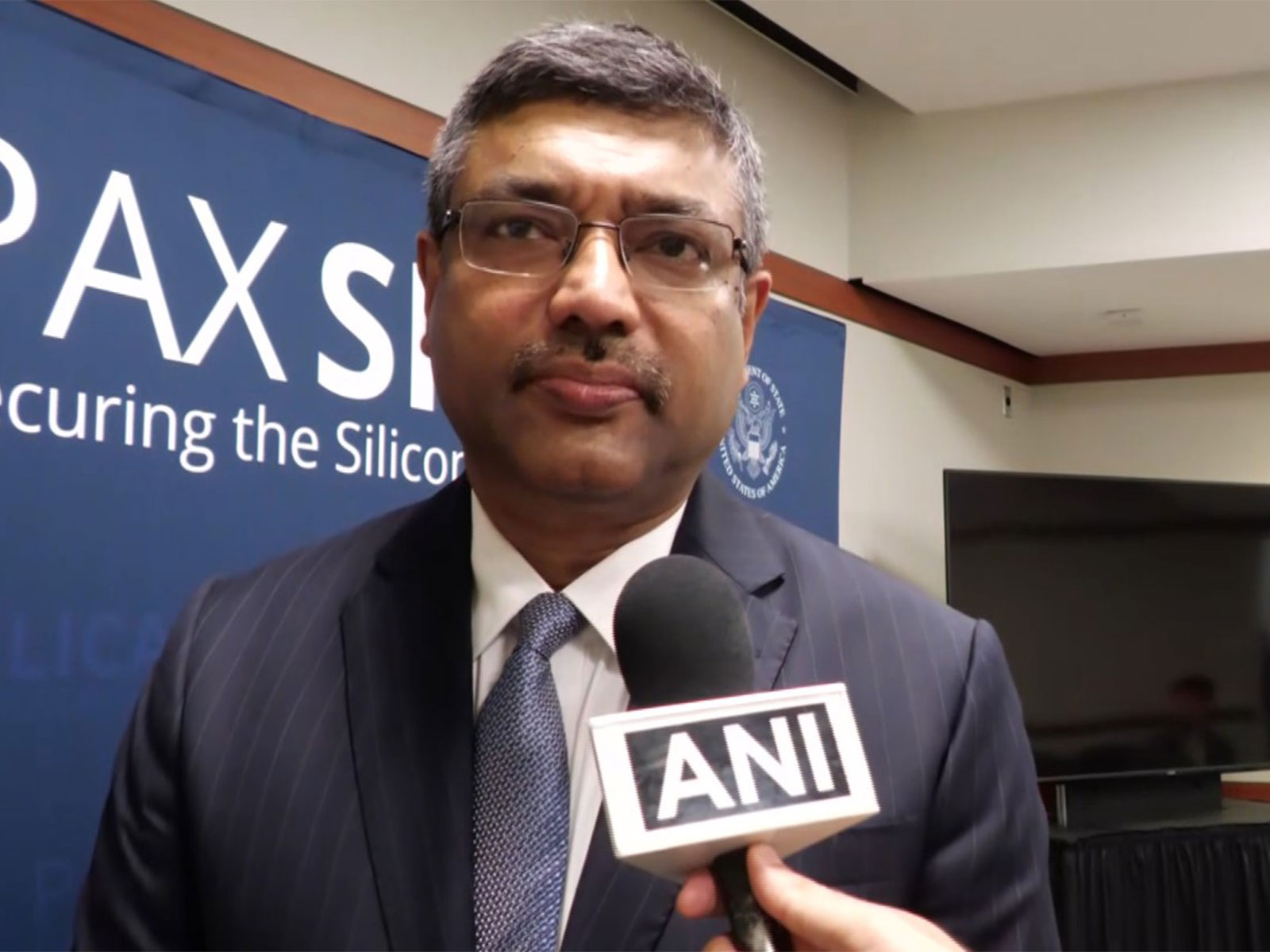
Washington DC [US], June 25 (ANI): S Krishnan, Secretary of the Ministry of Electronics and Information Technology (MeitY), on Thursday addressed discussions regarding AI collaboration between India and the United States, specifically focusing on the reliability of advanced models like Anthropic's Claude.
At the heart of the dialogue is the necessity for consistent, long-term access to frontier AI technologies. Secretary Krishnan, on the sidelines of the 2nd Pax Silica Summit, held in Washington, emphasised that for India to integrate such tools into its broader digital infrastructure and public-facing services, the partnership must be immune to sudden disruptions.
"We sought an understanding of how exactly the US is looking at this particular aspect and what their concerns are and how, in the future, this could be a reliable source of technology, because if it is something which is to be used and made available, we can't have abrupt cutoffs. We were given an understanding of how the US looks at this particular issue and how, going forward, they will ensure that for trusted partners, access will not be an issue," he said.
As India explores collaborations on advanced models, such as Anthropic's Claude, the government is prioritising the security of its technological infrastructure against sudden disruptions, regarding technological sovereignty and dependency.
An "abrupt cutoff" risks access to critical, foundational AI technology, which could be suddenly revoked or restricted. This vulnerability could arise from various factors, including shifting geopolitical policies, evolving export control regulations, or unilateral commercial decisions by the technology providers.
For a nation like India, which is actively integrating these advanced models into sensitive sectors, a sudden loss of access would have severe consequences.
Such a disruption could halt the progress of long-term AI-driven initiatives, impact digital platforms that rely on continuous AI functionality and compromise long-term developmental goals that assume steady technological access.
Krishnan said India was given an understanding of how the United States views the issue and how it intends to ensure that access to technology will not become a problem for trusted partners in the future.
He added that the broader objective remains to strengthen international cooperation while building resilient and diversified technology supply chains that can support the long-term growth of the global AI ecosystem.
In June, the US Commerce Department issued an export control directive that ordered Anthropic to restrict foreign nationals from using its newly launched AI models, Claude Fable 5 and Mythos 5.
To mitigate these risks, the Indian delegation sought direct clarity from the US government regarding their regulatory framework and long-term approach to the AI ecosystem. The objective was to transition from ad-hoc usage to a secure, predictable technology-sharing framework.
According to Secretary Krishnan, the discussions yielded positive results, with the US providing assurances regarding the future of the partnership. By establishing these frameworks, India aims to ensure that for "trusted partners," access to essential AI technology remains consistent and resilient, safeguarding the nation's digital transition against future volatility.
He said the discussions covered the future of AI innovation, the respective roles India and the United States can play, and the importance of deploying AI across sectors such as manufacturing, agriculture, healthcare, education and governance.
"The main issue which got discussed was ways in which India and the United States can collaborate and deepen the relationship in the technology space and what our shared understanding is of how the AI innovation scenario would evolve," Krishnan said.
He noted that there was a broad recognition that no single country can independently build the entire AI ecosystem and that global collaboration would be essential.
According to Krishnan, both sides acknowledged the need to build resilience in the global technology ecosystem by diversifying supply chains and reducing dependence on any single geography or source of supply.
"There was a recognition that India needs to play a much bigger role in the global supply chain and how it has been developing and growing," he said.
Speaking about discussions at the Pax Silica Summit, Krishnan said countries are expected to explore ways to build diversified and resilient supply chains across the entire AI stack.
He said this includes energy availability, infrastructure for data centres, semiconductor supply chains, development of AI models and applications, data usage and mechanisms that ensure AI technologies benefit society at large.
"The important element is the way that different countries in the world will come together to build a diversified and resilient supply chain for all that is needed in the AI stack," he said. (ANI)
Get the App