 हिंदी खबर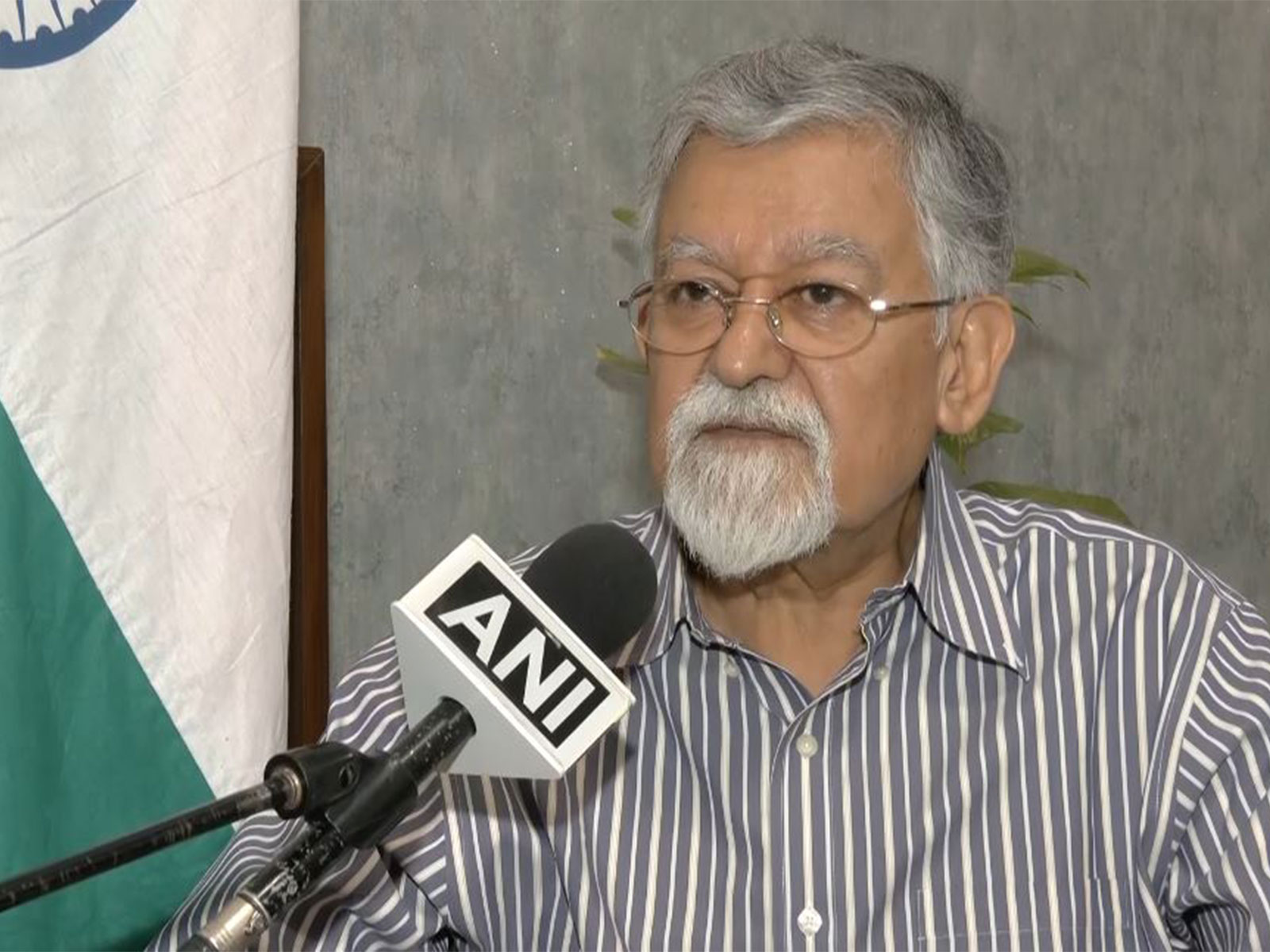

New Delhi [India], October 23 (ANI): India must adopt a dual strategy on rare earth minerals, focusing both on domestic mineral sourcing and international cooperation for processing and production of metals to stem dependence on China, the world's largest supplier, NITI Aayog Member Arvind Virmani said on Thursday.
"The whole world is highly dependent because they control 80 to 90 per cent of the metals, the rare earth metals actually," Virmani told ANI in an exclusive interview. "So, really there is a dual issue. One is of rare earth minerals and then translating those minerals into metals. So those have to be addressed separately or by different strategies."
While India possesses some rare-earth reserves, it will need to collaborate with other resource-rich nations to build a resilient supply chain, he said.
"In the case of minerals, we also have certain rare earth minerals, but we can also combine with other countries like Brazil, et cetera, which have different minerals, South Africa or other African countries, even Russia," he further told ANI.
But the more difficult and challenging part is really to convert those into metals, he said, adding that for this, collaboration is very important.
He said that the refining and metal processing stages are both technically challenging and environmentally sensitive, requiring stronger government involvement and international partnerships.
Virmani said, "One is that the processing is very polluting. So, the government has to play a much bigger role by helping them reduce pollution. The companies cannot do it by themselves, and especially so quickly."
He said the second key element is global collaboration to create economies of scale for research and production of rare earth metals.
"And the second is international cooperation. Again, you need scale. If you're going to invest a lot in a new R&D, the more your potential demand, the more that R&D can spread over," he added.
An assured demand in an international cooperative framework can also help accelerate the development of alternative sources of rare earth metals, he added.
Virmani's remarks come amid growing global efforts to diversify supply chains away from China and secure access to critical minerals needed for clean energy technologies, electronics, and defence production.
He said that India's dual strategy of domestic mineral exploration combined with international cooperation for processing would help reduce vulnerability and promote industrial self-reliance.
The NITI Aayog member also spoken about global economic volatility, trade negotiations, and India's growth forecast, saying that the "huge uncertainty in 2025 has made everybody uncertain, including those who are forecasting."
"Personally, I've had a forecast which I have not changed," Virmani said. "From the beginning of the year, my forecast was 6.5 per cent plus minus 0.5 and basically the events which have happened. I would say at this point that my focus has an upward bias."
He added that despite trade uncertainties, policy reforms such as the Goods and Services Tax (GST) are having a positive effect on private investment.
"GST definitely has a positive impact on private investment and to the extent there was some negative effect of the tariffs, I think it will largely be overcome by this," he said.
Virmani also referred to India's ongoing bilateral trade negotiations, calling them part of a shifting global dynamic.
"The imposition of tariffs then changed it into a non-cooperative game," he said. "And now the recent developments have moved it back to a cooperative game, one would expect a bilateral trade agreement to be signed at some point."
He said that such agreements would be "mutually beneficial" and would support "positive effects on both Indian growth and American growth."
On the manufacturing front, Virmani pointed out that India needs to diversify imports, identify alternative sources, and promote joint ventures to reduce dependence on Chinese supply chains.
"People have got so used to importing from China that they fail to identify alternative sources," he said. "Import substitution is possible, and we find that one big chunk of it, like machinery, for example, has segmented markets. China has cheaper but lower quality machines, but higher quality ones are available in Germany, Japan, and Taiwan."
He said encouraging these countries to carry out labour-intensive parts of their production in India could lower costs and strengthen India's manufacturing base.
"That is the third approach to encourage these countries to do some labour-intensive parts of their process in India, kind of a JV or joint production," he explained.
Virmani concluded that the diversification of supply chains, particularly in sectors such as mobile manufacturing, is already yielding results and will help India both reduce imports and expand exports.
"Once the demand is shifted by a company which has supply chains in China, then the supply chain and backward integration take place," he said. "That will help in reducing imports from China as well as contributing to exports." (ANI)




