 हिंदी खबर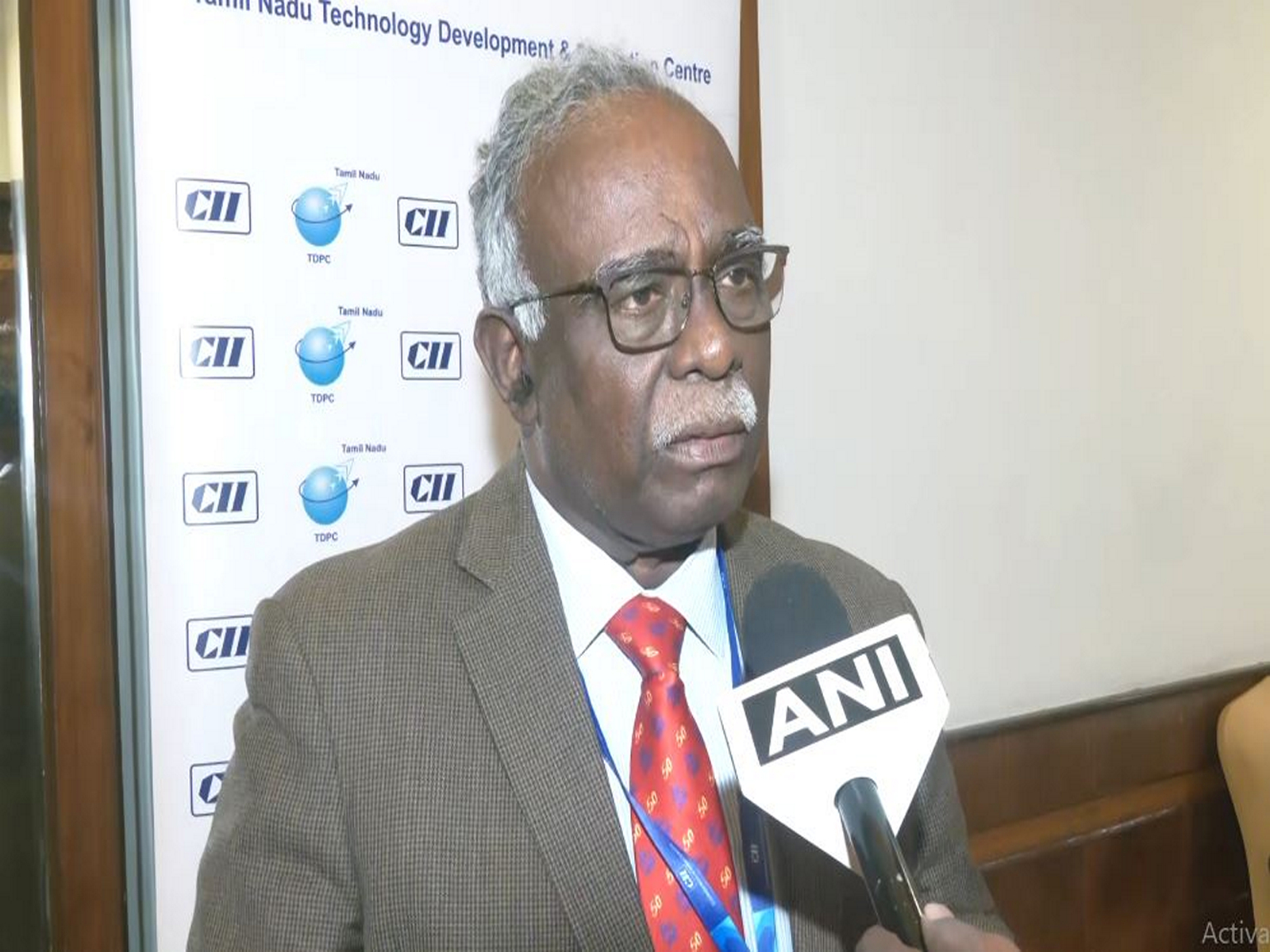

Chennai (Tamil Nadu) [India], November 7 (ANI): Air Marshal M Matheswaran (Retd), former Deputy Chief of the Indian Integrated Defence Staff, on Friday said that India will have to work with friendly countries for the success in the field of rare-earth materials.
However, the founder-chairman of The Peninsula Foundation emphasised that the country needs to develop capabilities "much more than what we have right now."
Matheswaran said, "Right now, we've just realised that we need to create capabilities much more than what we have right now, right? So there is a very big mountain to climb. So let's focus on that first, rather than focusing on we'll become rare earths leader later. We can see that later."
"In terms of partnership, yes, we have to work with friends. Japan, Australia, Singapore, Korea, US, UK. So these are all countries with whom we have industry and trade relations. But nobody gives you tech," Matheswaran added.
Rare earth materials are a group of 17 chemical elements--15 lanthanides, plus scandium and yttrium--that are not actually rare, but are difficult to extract and purify from the Earth's crust.
They are crucial for modern technology due to their unique properties, such as high magnetic strength, luminescence, and catalytic capabilities, and are found in everything from smartphones and electric vehicles to medical equipment and lasers.
Going further, he emphasised the importance of securing India's defence supply chains and developing indigenous capabilities in critical technologies.
"The radar elements are a critical part of the defence industry," Matheswaran said, noting their extensive use in "radars, sensors, missiles, weapons, smart bombs, and display systems."
He underlined that India must "identify critical technologies or materials" for which "there is no option but to ensure the supply chain is always safe and secure." While complete self-reliance is the goal, he said, "that's not always possible economically and viable. But we should ensure the supply chain is in our control."
Matheswaran said that "a lot of research" and "tests have been done" in this area, but "we are still not at a stage where it's indigenized fully."
Speaking about Hindustan Aeronautics Limited (HAL), he pointed out that the company "has had problems with the supply chain because there is so much of import dependency." Even when production happens domestically, "the raw material then comes from outside," which creates "a supply chain connection to import supply chains."
He explained that even indigenous weapons are not entirely self-reliant. "A lot of indigenous weapons are used, but even indigenous weapons have important components," he said. In advanced systems such as sensors and smart weapons, "they will have the rarest incorporation into it."
Matheswaran welcomed recent government initiatives to involve private industry in critical minerals and defence technology development. "The government has made the strategic plan, bringing in a lot of the private sector into it... bringing in a hub and spoke model and stitching together institutions and academic institutions," he said. This will help drive "R&D to be able to develop our own machinery, our own technologies."
He praised the government's decision to allocate "almost five billion dollars over seven years" for this effort, but cautioned that "it needs to be done" effectively to yield results.
Matheswaran also called for a shift in mindset regarding public sector units. "We need to get out of this old archaic idea of looking at PSUs as the only agency for the government," he said. "Now you need to have an equal playing field for both" public and private sectors to "address problems like this."
Highlighting the long road ahead, he said, "We need to create capabilities much more than what we have right now... there is a very big mountain to climb." (ANI)
India must partner with friendly nations for success in rare-earth materials, says former defence official
ANI | Updated: Nov 07, 2025 21:19 IST


