 हिंदी खबर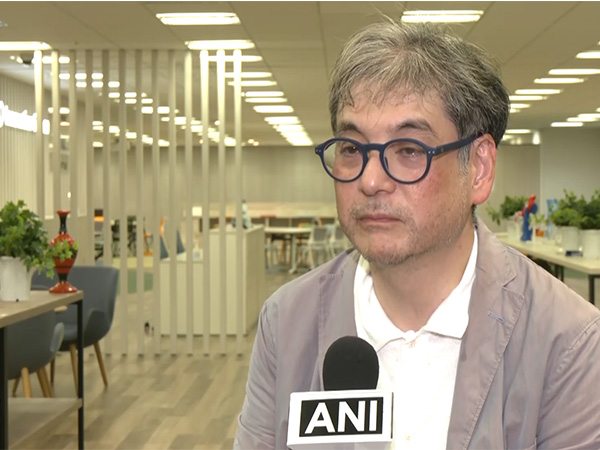

Tokyo [Japan], September 1 (ANI): Prime Minister Narendra Modi's visit to Japan has opened a new chapter in India-Japan collaboration in advanced technology sectors, with a particular focus on semiconductors.
Speaking to ANI, Kazuya Nakajo, Executive Vice President of the Japan External Trade Organisation (JETRO), underlined the opportunities for partnership between the two nations.
"Prime Minister Modi visited one of the leading companies of Japan in the semiconductor field, Tokyo Electron, a manufacturer of wafers and such. This is the mother of a semiconductor company," Nakajo said, highlighting Japan's strengths.
He noted that Japan is taking a lead in manufacturing semiconductor machinery and also the material side, and emphasised that the country has committed to manufacturing in India.
Nakajo said the timing of the visit was significant.
"This was the first thing after 2018. So it's been a seven-year gap. There was COVID and such in between. But this is a very good time for Japanese businessmen to create confidence toward India," he said.
During his visit, Prime Minister Modi has emphasised building a stronger technology base at home.
"PM announced that they put more concentration in new technology, advanced manufacturing, and semiconductor will take the key role on that," Nakajo said.
Regarding India's challenges in building a semiconductor ecosystem, Nakajo highlighted the country's heavy dependence on imports.
"There was a big concern that India has been dependent heavily on electronic manufacturing from foreign nations. Actually, one-third of Indian semiconductor imports were taken by China. So Prime Minister Modi has created a new policy to create a more resilient supply chain and a self-reliant nation in the manufacturing sector, advanced manufacturing sector," he explained.
He also noted the growth in semiconductor-related investments.
"From 2017 to 2020, in these four years, there were 22 investments made in semiconductors to India, and from 2021 to 2024, it has increased to 58. So this growth is because the market prospect of India is very big, and the other thing is India showed their standpoint as a friendly nation to Japan," he said.
Nakajo said Japan's global role in semiconductors could extend to India as well.
"Fifty per cent of semiconductor materials and one-third of the global machinery were supplied by Japan. So Japan is a key country to create that kind of supply chain and semiconductor industry itself. We've been contributing to the U.S., we've been contributing to China, we've been contributing to Taiwan and Korea. So we can do more for India to create a semiconductor industry," he stated.
He also referred to recent agreements signed between the two countries.
"This time, a lot more diversified business sectors can be seen. For example, there are some in semiconductors, there are some in AIs, there are some in academic collaboration in quantum, and there are some in the space field. So I can see more kinds of mature collaboration, more high-tech collaboration, more academic collaboration between these two nations," he said.
"This is reflecting the world's new trend to create strong supply chains in these advanced technology areas, which should be the engine for further economic development for both countries, especially for India."
Nakajo acknowledged that Japan was relatively late in tapping India's talent pool.
"Europe has been trying to attract new Indian talent in the last two decades. America has been there for three or four decades. Japan has just started. But we try to create more kind of a livable society for Indian nations and try to create a more good living environment for them," he said, adding that "many Japanese companies are starting to consider creating a global creation center in India," he said.
According to him, such initiatives will strengthen mutual exchange.
"These are kind of both mutual exchange shall be expected in the next few years," he concluded.
PM Modi concluded his two-day visit to Japan on Saturday, describing it as "productive" and highlighting the positive outcomes achieved during his engagements.
He expressed gratitude to Japanese Prime Minister Shigeru Ishiba for the warmth extended to him during the visit.
In a post on X, he said, "This visit to Japan will be remembered for the productive outcomes which will benefit the people of our nations. I thank PM Ishiba, the Japanese people and the Government for their warmth." (ANI)
India-Japan cooperation to strengthen India's semiconductor ecosystem
ANI | Updated: Sep 01, 2025 09:03 IST




