 हिंदी खबर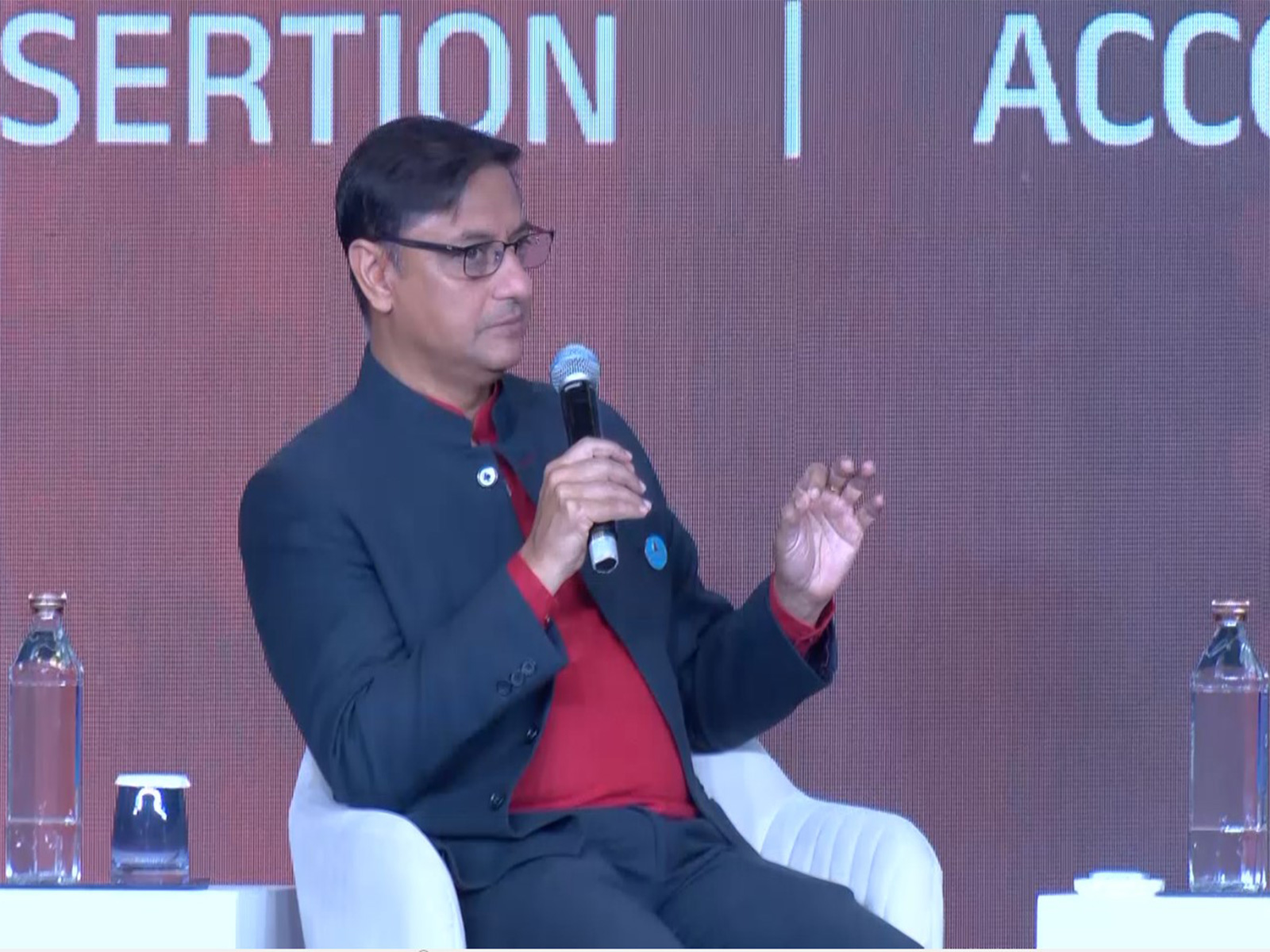

New Delhi [India], March 7 (ANI): India's heavy reliance on foreign vessels for international trade represents a significant strategic vulnerability, warned Sanjeev Sanyal, Member of the Prime Minister's Economic Advisory Council. Speaking at the Raisina Dialogue on Saturday, Sanyal noted that the domestic fleet is currently insufficient to protect the economy from potential global supply chain disruptions or targeted boycotts.
Sanyal explained that the vast majority of India's goods trade is handled by international shipping lines, leaving the nation's economy exposed to external pressures. He stated, "90 to 95 per cent of all our goods trade is carried by foreign ships. So, if you really want to get India into trouble, all you really need to do is to get three or four of the largest shipping lines to boycott India for some reason. And this would really cause serious... severe stress to the Indian economy."
The current scale of India's merchant fleet is a primary concern, with Sanyal pointing out that the country possesses only a small fraction of the necessary vessels. He noted: "India only has 480 functioning, seagoing vessels. I'm not taking fishing trawlers into account, but proper tankers and other things, just 480."
Beyond the lack of ships, Sanyal highlighted a massive global imbalance in shipbuilding, where production is almost entirely concentrated in Northeast Asia. India currently accounts for a negligible portion of global construction. He said: "55 to 60 per cent of all the ships currently under construction or newly constructed were done in... China, another 20 per cent Japan, another 20 per cent South Korea. So if you combine those three countries in Northeast Asia, 95 per cent of all the ships currently under construction are in that one region. Rest of the world combined is 5 per cent, of which we are less than 0.5 per cent."
To counter this, the government has begun a "huge reorientation" of maritime policy, including a significant financial package and infrastructure status for the sector. Sanyal mentioned: "In the last two or three years, we have taken this very, very seriously. We have changed all our shipping, ship flagging and ownership rules just a year ago. We have given a 70,000-crore package for ship building. We have given ships infrastructure status."
Sanyal argued that India is uniquely positioned to become a global shipbuilding hub due to its steel production, design capabilities, and labour force. He emphasised that the sector is now attracting international attention: "In the last year and a half, I'm pleased to say we are not only getting Indian orders, we are also getting foreign orders, serious foreign orders. And some of the world's largest shipbuilders like Hyundai, Mitsubishi, etc, they're looking to shift some of their... shipbuilding activities to India."
While high-tech sectors often dominate the headlines, Sanyal insisted that maritime independence is a top-tier national priority. He concluded: "People tend to think of all the high-tech stuff, you know, AI and chips and all that. But I would argue that shipbuilding is just as much a big priority area that India is pushing."
Mehul Pandya, MD & Group CEO of CareEdge Group, also attended the event, and he spoke on the importance of the summit, stating: "It's an excellent initiative by ORF. The Raisina Dialogue is one of the premier conferences. There is an intense learning experience. The developments which are taking place are impacting every economy." (ANI)


