GST restructured one of the world's clumsiest indirect tax system: Jaitley
New Delhi [India], July 1 (ANI): Former Finance Minister Arun Jaitley said on Monday that implementing the Goods and Services Tax (GST) regime two years ago was a monumental restructuring of one of the world's clumsiest indirect tax system.
ANI
Jul 01, 2019 13:03 IST

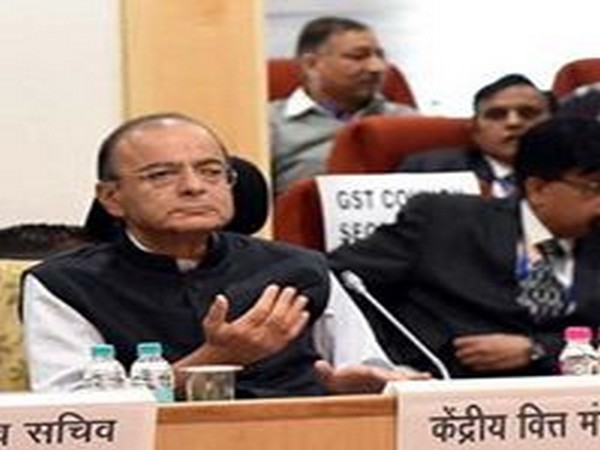
New Delhi [India], July 1 (ANI): Former finance minister Arun Jaitley said on Monday that implementing the Goods and Services Tax (GST) regime two years ago was a monumental restructuring of one of the world's clumsiest indirect tax system.
It was not an easy task and challenges to implement it were compounded by outlandish and exaggerated comments of the not so well-informed, he wrote in a blog post. However, the Centre and states have pooled their fiscal rights in a collective forum to create one common market.
"My own experience of two years while chairing the GST Council was that finance ministers of states, notwithstanding the political position their parties take, have displayed a high level of statesmanship and acted with maturity. The council worked on the principle of consensus. This has added to the credibility of the decision-making process. I am sure this trend will continue in future," wrote Jaitley.
In the pre-GST regime, the states had multiple laws which entitled them to impose taxation at different points. There were twin challenges. First, to get the states to agree because some of them felt they were losing their fiscal autonomy to tax. Second, to develop a consensus in the Parliament.
Jaitley said the states were scared of the fear of the unknown. "The critical point which enabled the government to persuade the states was to cushion them with a 14 per cent annual increase from the tax base of 2015-16 for a period of five years."
The GST merged all these 17 different laws and created one single taxation. The pre-GST rate of taxation as a standard rate for the value-added tax was 14.5 per cent, excise at 12.5 per cent and added with the central sales tax and the cascading effect of tax on tax, the tax payable by the consumer was 31 per cent.
Entertainment tax was being levied by states from 35 per cent to 110 per cent. The assessee had to file multiple returns, entertain multiple inspectors and additionally face the inefficiency with trucks being stranded at state boundaries for days altogether.
"The GST changed this scenario completely. Today, there is only one tax, online returns, no entry tax, no truck queues and no inter-state barriers, said Jaitley. "After two years, one can confidently argue, without fear of contradiction that GST proved to be both consumer and assessee friendly."
The last two years have seen each of the GST Council meetings reducing the tax burden on consumers as the tax collections improved. An efficient tax system certainly leads to better compliance. The 31 per cent tax, which was temporarily 28 per cent, has seen the largest single reform.
Most items of consumer use have been brought in the 18 per cent, 12 per cent and even 5 per cent category. Only luxury and sin goods remain in addition to some white goods.
The assessee base in the last two years has increased by 84 per cent. The number of assessees covered by the GST was around 65 lakh. Today, they are at 1.2 crore. This obviously leads to higher revenue collections.
In the eight months of 2017-18 (July to March), the average revenue collected per month was Rs 89,700 crore per month. In the next year (2018-19), the monthly average has increased by about 10 per cent to Rs.97,100 crore.
The fear of the states today is that for the first five years they get a guaranteed 14 per cent increase. The lurking doubt is as to what will happen after five years? Every state has been paid its share of tax as also from the compensation fund if necessary.
"We have just completed two years of GST. Already after the second year, 20 states are independently showing more than a 14 per cent increase in their revenues and the compensation fund in their case is not necessary, said Jaitley. (ANI)
Get the App