Government launches Employment Linked Incentive Scheme to help first-time workers and employers
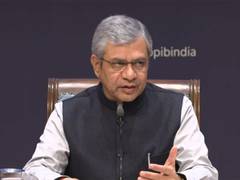
The Union Cabinet, led by Prime Minister Narendra Modi, has approved a new scheme called the Employment Linked Incentive (ELI) Scheme to promote job creation and improve social security on Tuesday.
ANI
Jul 01, 2025 15:31 IST


New Delhi [India], July 1 (ANI): The Union Cabinet, led by Prime Minister Narendra Modi, has approved a new scheme called the employment-linked-incentive">Employment Linked Incentive (ELI) Scheme to promote job creation and improve social security on Tuesday.
According to the cabinet briefing, the scheme is designed to help both first-time workers and employers, with a special focus on the manufacturing sector.
The ELI Scheme aims to create over 3.5 crore jobs in two years, with a total budget of Rs 1 lakh crore. Out of this, 1.92 crore first-time employees are expected to benefit.
These are people who are entering the workforce for the first time. They will receive one month's wage (up to Rs 15,000) as a financial incentive, given in two instalments.
The first installment will be provided after six months of employment, and the second after twelve months, along with the completion of a basic financial literacy program. To encourage saving habits, a part of this amount will be deposited in a savings account that can be withdrawn later.
Employers will also receive incentives for hiring new workers. Companies hiring additional employees will get up to Rs 3,000 per new worker per month for two years.
In the case of manufacturing companies, the benefit will extend up to four years. Employers with fewer than 50 employees must hire at least two additional workers to qualify, while those with 50 or more must hire at least five. The new employees must earn up to Rs 1 lakh per month to be eligible under the scheme.
Payments under the scheme will be made directly to the bank accounts of the workers and employers. Employees will receive their incentives via Direct Benefit Transfer (DBT) using the Aadhar-based payment system, while employers will receive payments in their PAN-linked business accounts.
For every new employee earning up to Rs 10,000 per month, the employer will receive a monthly incentive of up to Rs 1,000. The exact amount may vary as it will be calculated proportionally based on the employee's wage within this slab.
If the new employee earns more than Rs 10,000 and up to Rs 20,000 per month, the employer will receive a fixed incentive of Rs 2,000 per employee per month.
For employees earning more than Rs 20,000, up to a maximum of Rs 1 lakh per month, the employer will be eligible to receive a monthly incentive of Rs 3,000 per additional employee.
This wage-based incentive structure aims to encourage businesses to hire more workers, especially in the formal sector. The government expects this part of the scheme to help generate employment for approximately 2.60 crore people over the next two years, significantly boosting job opportunities across various sectors.
The government believes the ELI Scheme will not only help create jobs but also bring more people into the formal workforce. (ANI)
Get the App