

ADD ANI AS A TRUSTED SOURCE
googleads
Menu
Business

Freebies: Short-term political gain may become long-term economic distress, says Report

Once just campaign promises, political freebies have now become a crucial strategy for winning elections in India.

ANI Feb 10, 2025 11:59 IST googleads

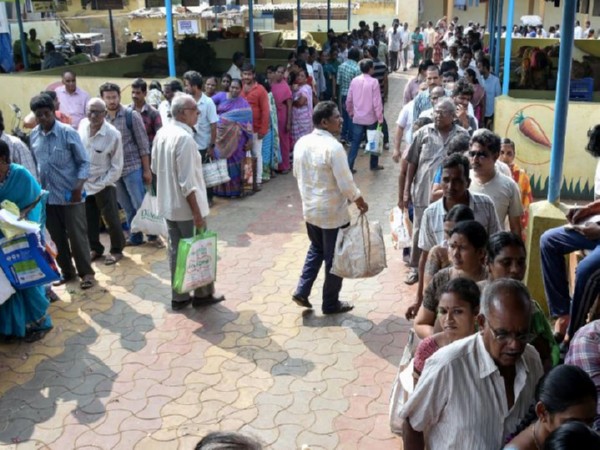
Representative Image (Photo/ANI)

New Delhi [India], February 10 (ANI): Once just campaign promises, political freebies have now become a crucial strategy for winning elections in India.
A report by Aequitas Investments highlights how political parties are increasingly relying on freebies in the name of welfare schemes to secure votes, often at the cost of state finances.
"As political parties compete in what appears to be a race to the bottom, welfare schemes and "freebies" have evolved from mere campaign promises to the new currency of political power," it says.
The report highlights that as the race for political power intensifies, the challenge will be to ensure that short-term political gains do not lead to long-term economic distress.
It says the 2024 general elections marked a significant shift in the country's fiscal policies. State elections further demonstrated how political parties are competing in a "race to the bottom," offering more and more freebies to outdo each other.
These welfare schemes, though beneficial for citizens in the short term, pose serious financial risks for states in the long run says the report.
Take Karnataka as an example. After the Congress party's victory in the state elections, it introduced several costly welfare schemes. The Gruha Lakshmi scheme, which provides Rs 2,000 per month to women, and the Gruha Jyoti scheme, which offers 200 units of free electricity, have together led to an expenditure of about Rs 52,000 crore.
This amount accounts for 78 per cent of the state's fiscal deficit for 2023-24, raising concerns about Karnataka's financial stability. In contrast, the BJP's planned welfare spending in the state was only Rs 2100 crore, or just 3 per cent of the deficit.
This trend is not limited to Karnataka. Other states have followed suit, announcing their costly welfare programs:
Maharashtra launched schemes such as the "Ladli Behna Yojana," abolition of toll charges on state highways, farm loan waivers, and free healthcare, costing Rs 44,000 crore annually.
Uttar Pradesh committed Rs 36,000 crore to women's pensions and old-age welfare programs.
Bihar introduced a 75 per cent reservation policy in jobs and educational institutions. Delhi expanded power subsidies, allowing 2.2 million households to receive zero electricity bills. Recently held elections in Delhi promises Rs 2100-2500 to all women above the age of 18 years, in addition to already given free bus travel to women of Delhi.
The financial strain of these policies is becoming evident. Delhi has sought a loan of Rs 10,000 crore from the National Small Savings Fund (NSSF) for 2024-25, despite opposition from its own finance department.
Similarly, Punjab, Himachal Pradesh, and Karnataka are struggling to even pay salaries to government employees.
The report draws a comparison with Brazil's Bolsa Familia program, which started in 2003 with a target of financial aid to 3.6 million families. By 2020, the scheme expanded to 14.1 million families, significantly reducing poverty but also contributing to the country's economic difficulties. (ANI)


Get the App

What to Read Next

Business

Govt Urges Citizens to Avoid Panic Booking

Govt Urges Citizens to Avoid Panic Booking

Amid global energy disruptions following the closure of the Strait of Hormuz, the government has assured that the domestic supply of LPG, petrol, diesel, kerosene, and natural gas remains stable, while citizens are urged to avoid panic booking and conserve fuel, said Sujata Sharma, Joint Secretary of the Ministry of Petroleum and Natural Gas, today.

Read More
Business

India pushes for green ship recycling, euro-compliant yards

India pushes for green ship recycling, euro-compliant yards

India is rapidly expanding its ship recycling sector and upgrading shipbreaking yards to meet European environmental standards, as part of a broader effort to strengthen its maritime industry and reduce logistics costs, Sushant Kumar Purohit, Chairperson of VO Chidambaranar Port Authority, said today.

Read More
Business

With India’s Fasteners Market Projected at USD 17 Billion by 2034

With India’s Fasteners Market Projected at USD 17 Billion by 2034

New Delhi [India], March 12: The Indian fasteners market continues to demonstrate strong momentum, having reached USD 11.2 billion in 2025 and is projected by the IMARC Group to surge to USD 17.0 billion by 2034, reflecting a robust CAGR of 4.67% during 2026-2034. This dynamic growth is fueled by the expansion of the automotive, construction, and industrial sectors, as well as increasing demand for high-performance, lightweight fasteners, and strategic government initiatives such as "Make in India." In this thriving context and to boost domestic manufacturing, Messe Stuttgart India has launched FASTNEX 2027 with its highly anticipated Signature Edition, set to take place from 8th to 10th February 2027 at the Bombay Exhibition Centre, Mumbai. The event stands as a crucial platform for industry professionals to showcase innovative products, access market intelligence, foster collaborations, and expand their business networks, ultimately contributing to the overall advancement of India's manufacturing sector.

Read More
Business

Jindal Steel Declared Preferred Bidder

Jindal Steel Declared Preferred Bidder

Bhubaneshwar (Odisha) [India], March 12: Jindal Steel has been declared the preferred bidder by the Government of Odisha for the Rengalaberha North-East Extension and Nuagan West Iron Ore Block in Keonjhar district. The iron ore block spans approximately 84 hectares. Following the successful conclusion of the online auction, Jindal Steel has committed to a final price offer of 111.15 per cent premium to the Government of Odisha.

Read More
Business

India’s semicon journey to move towards design-led manufacturing

India’s semicon journey to move towards design-led manufacturing

India's semiconductor ecosystem is set to move towards design-led manufacturing, where chips are designed and manufactured within the country and then supplied globally, according to Ashok Chandak, President of the India Electronics and Semiconductor Association (IESA) and SEMI India.

Read More
Home About Us Our Products Advertise Contact Us Terms & Condition Privacy Policy

Copyright © aninews.in | All Rights Reserved.


