Covid-19 to inflict loss of Rs 1 lakh crore on real estate sector in FY21: KPMG
New Delhi [India], May 19 (ANI): The consequent loss of Covid-19 pandemic outbreak to India's real estate sector is estimated to be Rs one lakh crore by the end of current financial year, according to a new report by global professional services firm KPMG released on Tuesday.
ANI
May 19, 2020 17:06 IST

New Delhi [India], May 19 (ANI): The consequent loss of Covid-19 pandemic outbreak to India's real estate sector is estimated to be Rs one lakh crore by the end of current financial year, according to a new report by global professional services firm KPMG released on Tuesday.
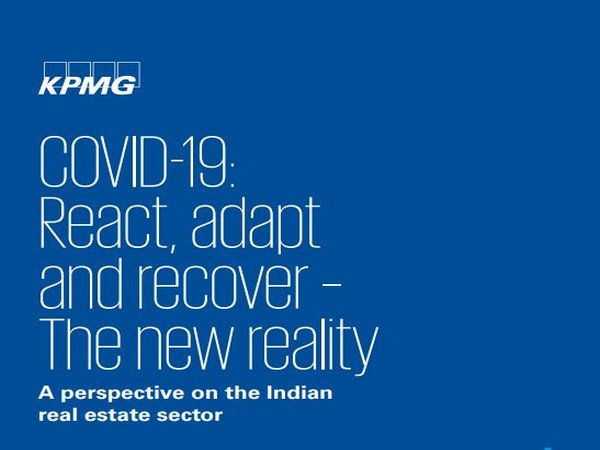
"Supporting the economic contribution through more than 250 industries, the real estate sector in India will be temporarily and ominously handicapped by the ongoing pandemic," said the report titled 'COVID-19: React, adapt and recover - The new reality.'
The short-term impact in coming 6 to 12 months is likely to be a dampener for real estate sector's recovery, forcing sector entities to contract operations, revisit planned developments, expansions, and investments across the real estate sector.
Counter strategies to mitigate the impact will likely focus on cost optimisation, liquidity improvement, space design and layout efficiency maximisation, re-negotiations of contracts, and calibration of business operating models across the board.
As the situation moves closer to normalisation with lockdown easements across India and globally in the medium term, the recovery process will see rapid traction, bringing new opportunities within specific real estate segments.
With a staggered revival, the long-term outlook for the real estate sector in the coming 18 to 24 months may likely emerge positive.
Albeit social distancing norms and workplace health safety regulations affecting contraction, the real estate industry's structural transformations will bring forth latent opportunities within untapped real estate segments such as data centres, integrated supply chains, warehousing, self-sustaining industrial parks, design efficiency processes social distancing and preventive hygiene cognizant commercial and hospitality spaces.
"The ongoing financial woes, as well as an unprecedented global crisis of the pandemic, have unsettled the investment climate and almost no industry is insulated from its impact," said Chintan Patel, Partner and Leader for Building, Construction and Real Estate at KPMG in India.
In the residential sector, pre-COVID-19 challenges related to subdued demand and liquidity pressures will continue creating a slowdown in sales in the short to medium term, the report said. Credit crunch impact will create residential sales contraction, bringing down sales from 4 lakh units in 2019-20 to 2.8 lakh to 3 lakh units in 2020-21 across in top seven cities.
In the commercial sector, the IT and BPM sector is anticipated to continue driving demand for office space. Despite steady leasing in flexible workspaces across major Indian cities, the segment will face major headwinds over the next 9 to 12 months.
Facilities management could emerge as a critical enabler to supporting business continuity during the current pandemic ensuring normalcy in office operations and technology support (remote working) for transitioning back to 'business as usual'.
Facilities management companies may look to diversify their client beyond traditional go-to sectors such as office and retail to hedge risks. Post pandemic flattening, sectors like pharma, healthcare will witness stronger cashflows while industrial segments such as manufacturing and warehousing may also see positive growth.
In retail real estate, the recovery is expected despite uphill challenges. India's consumption expenditure stood at 1.92 trillion dollars in 2018, growing at a CAGR of 7 per cent for the last 9 years. Post lockdown, the consumer discretionary spending is likely to remain subdued.
Partial lockdown leasing with 50 to 60 per cent contraction in mall footfalls is expected from pre-COVID-19 levels coupled with a significant downtick in overall trading density.
In the hospitality sector, the operating performance of hotels for Q2 and Q3 of 2020 is likely to be poor. Recovery will vary and be contingent upon sector dynamics. Sectors where remote working is not feasible (such as manufacturing, defence etc) will see quicker recovery which would lead to improved domestic business travel.
In industrial real estate, the post-COVID-19 outlook will be a mixed bag where on one side the industry struggles with supply-side disruptions for maintaining operational capacity while on the other side, the focus on localisation of supply chains and catering to domestic demand will provide a fillip for capacity additions, diversification and expansions.
In warehousing, a quicker recovery supported by e-commerce. However, new leasing activity in 2020 is expected to witness a sharp decline (40 to 50 per cent) compared to 2019. Over the next two to four years, there could be restructured supply chains, preference for local distribution centres and a potential shift of global manufacturers from China to other ASEAN countries and India.
The ease of doing business and policy framework stability are key to make India a manufacturing hub.
Data centres are an essential service in the new digital paradigm. The overall data traffic has increased by more than 20 per cent compared to the pre-COVID-19 period. Demand for virtualisation, managed services and cloud infrastructure is gaining traction as enterprise data centres face access restrictions. (ANI)
Tags:
Get the App