Competition policy and regulatory tools must evolve to address emerging tech challenges: Niti Aayog member Gauba
"AI has the potential to supercharge productivity, but it also introduces novel antitrust risks. We face the possibility of algorithmic collusion, where self-learning bots might coordinate prices without any human interaction," Gauba said. "We see the risk of AI-driven entry barriers, where incumbents use their vast advantages in data and compute power to foreclose potential rivals." Speaking at the 11th National Conference on Economics of Law, Gauba said competition is a powerful force that drives innovation, efficiency and consumer choice, creating dynamism in the economy and society. However, he cautioned that markets left without robust policy and oversight can lead to concentration, collusion and exclusion.
ANI
Mar 16, 2026 14:42 IST

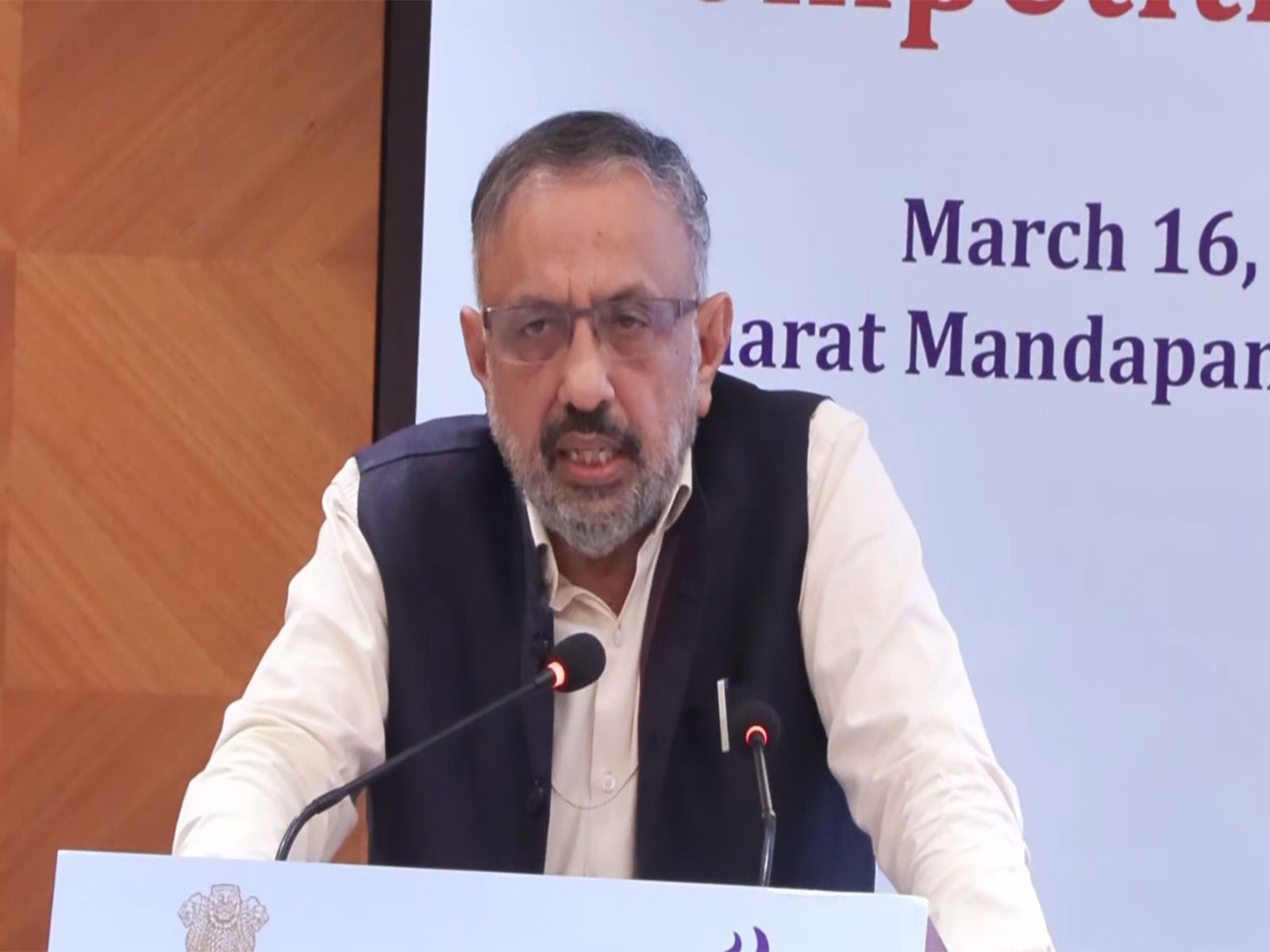
New Delhi, [India] March 16 (ANI): Artificial intelligence could create new competition risks, including algorithmic collusion and AI-driven entry barriers, Rajiv Gauba, member of NITI Aayog, said.
"AI has the potential to supercharge productivity, but it also introduces novel antitrust risks. We face the possibility of algorithmic collusion, where self-learning bots might coordinate prices without any human interaction," Gauba said. "We see the risk of AI-driven entry barriers, where incumbents use their vast advantages in data and compute power to foreclose potential rivals."
Speaking at the 11th National Conference on Economics of Law, Gauba said competition is a powerful force that drives innovation, efficiency and consumer choice, creating dynamism in the economy and society. However, he cautioned that markets left without robust policy and oversight can lead to concentration, collusion and exclusion.
In emerging economies like India, competition law and regulation help prevent crony capitalism and entrenched monopolies from distorting markets while promoting open entry, supporting smaller businesses and enabling integration into global value chains, he said.
Gauba noted that the evolution of India's competition framework must be understood in the context of the country's broader economic transformation over the decades. In the years after independence, India followed a command-and-control model of industrialisation characterised by industrial licensing, import quotas and tariff protections that shielded domestic producers from competition.
Under the "license raj", firms required government permission to expand capacity, import inputs or enter new lines of business. Companies were sometimes unable to increase production even when shortages existed because they were bound by licensed capacity limits. As a result, businesses often had to compete for government approvals rather than compete in markets, he said.
The balance-of-payments crisis of 1991 became the catalyst for sweeping economic reforms that liberalised the economy and shifted the government's role from a controller to a facilitator. Reforms such as the Open Sky policy and the repeal of the Air Corporations Act in 1994 liberalised civil aviation, while the National Telecom Policy of 1994 dismantled the state monopoly in telecommunications.
India later enacted the Competition Act, 2002, to replace earlier regulatory frameworks, focusing on preventing abuse of market power and promoting competition. The Competition Commission of India was subsequently established in 2009 as the enforcement authority to ensure markets function in the interests of consumers.
Gauba said several major reforms in recent years have further strengthened competitive markets. The Insolvency and Bankruptcy Code institutionalised a time-bound resolution process and enabled cleaner exits for failing firms, while the Goods and Services Tax dismantled internal trade barriers, unified the national market and eliminated cascading taxation.
Looking ahead, Gauba said India's ambition to become a developed country by 2047 would require the economy to expand from about USD4 trillion today to around USD 30-35 trillion, implying sustained real GDP growth of roughly 8 per cent annually.
Achieving this target will require strengthening all major sectors, agriculture, manufacturing and services, he said, adding that India must transform into a manufacturing powerhouse while prioritising labour-intensive industries and the MSME ecosystem to generate employment for its growing workforce.
Since 2014, India's manufacturing sector has recorded about 4.5 per cent annual gross value added growth, higher than the global average of 2.7 per cent and outperforming several major economies. However, India still accounts for less than 3 per cent of global manufacturing output, compared with China's 31.6 per cent share, highlighting the distance the country still needs to cover.
Export trends also reveal an imbalance, he said, noting that services exports have grown by 126 per cent over the past 10-11 years, while manufactured goods exports have grown by slightly less than 40 per cent, indicating the need for a stronger push to boost manufacturing exports.
Gauba said the rise of the digital economy has created new market dynamics characterised by strong network effects, economies of scale and the central role of data, often resulting in "winner-takes-most" outcomes.
He added that the Competition Commission of India has established a Digital Markets Division staffed with data experts to monitor and investigate digital ecosystems. He also referred to the draft Digital Competition Bill, which proposes an ex-ante regime aimed at placing pro-competitive obligations on systemically significant digital enterprises.
"As we grapple with the digital economy, our competition toolkit must evolve again," Gauba said, adding that regulators will need new guidance to identify algorithmic harms and ensure transparency while protecting the competitive process and consumer interests. (ANI)
Tags:
Get the App