China's EUV ambitions unlikely to materialize this decade
As per the report, China built a prototype EUV machine intending to start mass production by 2028. However, bridging the gap between a one-off demonstration and the high-volume requirements of a modern semiconductor fab is a feat that requires more than just capital and recruitment.
ANI
Apr 15, 2026 17:36 IST

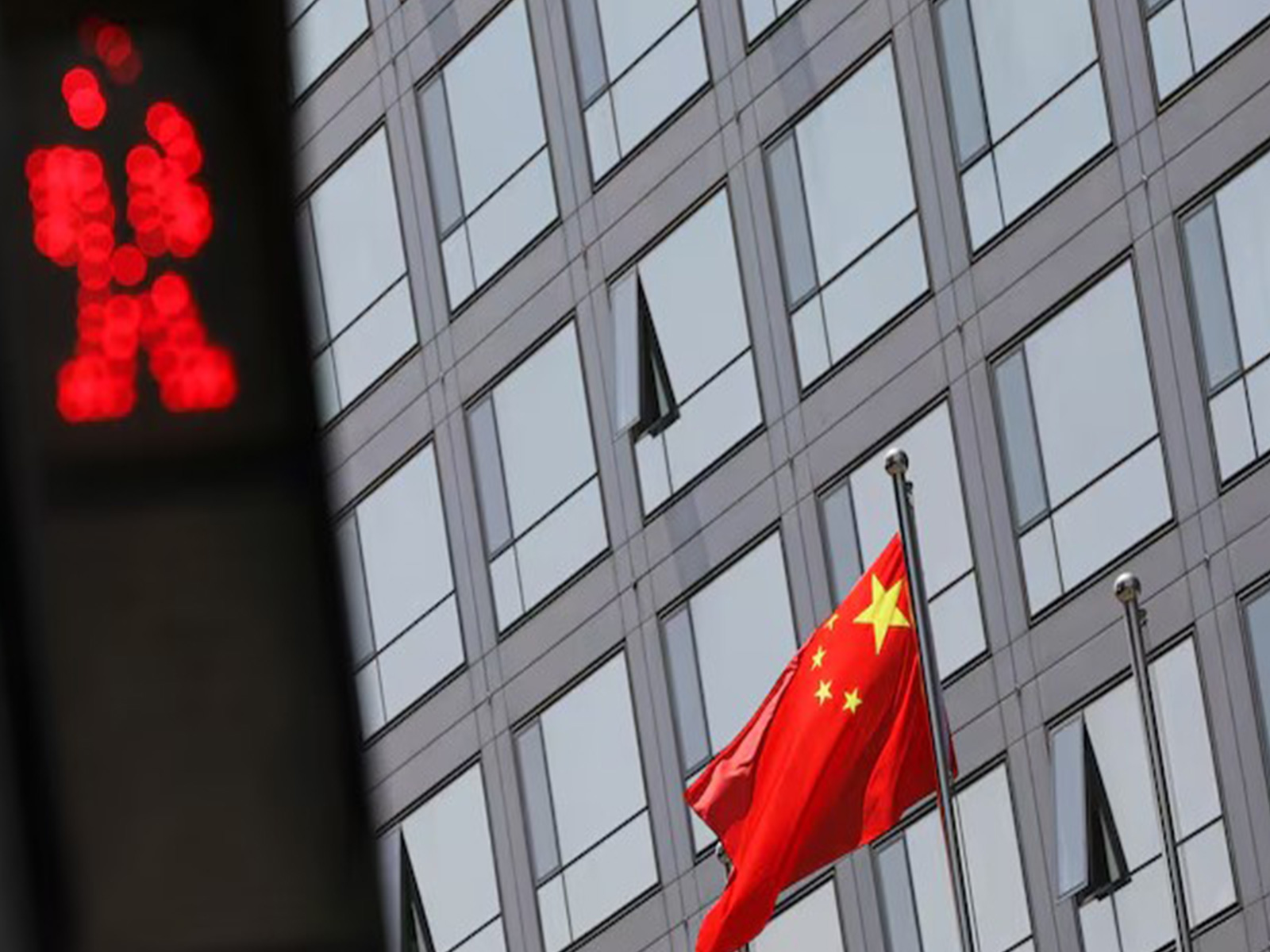
Seoul [South Korea], April 15 (ANI): China faces a significant uphill battle in its pursuit of domestic extreme ultraviolet (EUV) lithography tools, according to a report by The Korea Herald. It noted that developing mass-production systems within this decade remains highly unlikely despite intense state-backed efforts.
While Beijing aims to circumvent US-led export controls by reverse-engineering older equipment, the transition from laboratory prototypes to commercial-scale manufacturing presents technical hurdles that have historically thwarted even the most established industry giants.
As per the report, China built a prototype EUV machine intending to start mass production by 2028. However, bridging the gap between a one-off demonstration and the high-volume requirements of a modern semiconductor fab is a feat that requires more than just capital and recruitment.
"For China, a one-off demonstration of a homegrown EUV system is possible," the report quoted Ahn Jin-ho, a materials science professor at Hanyang University. "But developing a system capable of high-volume manufacturing within the next decade is unlikely."
The precision required for EUV lithography, which etches circuits thousands of times thinner than a human hair, is currently the exclusive domain of the Dutch firm ASML. China currently relies on deep ultraviolet (DUV) tools, which require expensive and inefficient multiple patterning steps to achieve advanced results.
"Below 7-nanometer nodes, EUV lithography is effectively indispensable," the report quoted Ahn Ki-hyun, executive director of the Korea Semiconductor Industry Association. "If China succeeds in localising EUV, it could reshape the chip landscape. But it won't happen overnight."
The scepticism regarding China's 2028 target stems from the sheer complexity of the machinery, which consists of more than 100,000 components. Professor Ahn Jin-ho noted that even previous market leaders failed to master the technology.
"Industry heavyweights like Nikon and Canon, which long dominated lithography, never cracked EUV. This is not a technology you can brute-force your way into," Ahn said.
"Achieving that level of optimisation -- from particle control to managing hydrogen environments inside EUV systems -- takes decades of accumulated know-how," Ahn added.
The economic reality of semiconductor manufacturing also poses a threat to Chinese firms like Semiconductor Manufacturing International Corporation and Yangtze Memory Technologies. While they have pushed older tools to reach near 3-nanometer capabilities, the cost of repeating patterning steps is becoming prohibitive.
"In manufacturing, it is all about cost and profit. If you need multiple exposures just to match what EUV can do in one, the economics simply don't work," the report quoted an industry official.
While China struggles with development, South Korean giants Samsung and SK hynix continue to widen the gap. Samsung recently ordered approximately 20 EUV machines as part of a massive investment for its Pyeongtaek fab, while SK hynix committed 11.9 trillion won for tools to support AI memory production.
Professor Ahn emphasised that having the machines is only part of the challenge, as yield and quality depend on operational experience.
"Even with the same tools, outcomes can vary. Component differences, tool condition and operator experience all affect yield and quality," Ahn said.
"Chipmakers rely on a mix of EUV, ArF and KrF, and decisions on where to deploy each technology also shape both performance and cost competitiveness," he added. (ANI)
Tags:
Get the App