Centre assures 20% ethanol blending target has no impact on India's food security or water stress
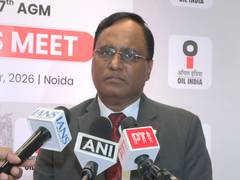
Replying to a question in the Rajya Sabha, Minister of State for Petroleum and Natural Gas Suresh Gopi said, "The target of 20% ethanol blending has not affected food crop availability or India's food security." He added that the government follows "an open-ended procurement system at the Minimum Support Price (MSP), under which procurement for the Public Distribution System (PDS), National Food Security Act (NFSA), Other Welfare Schemes (OWS) and prescribed buffer stocks is accorded the highest priority."
ANI
Jul 20, 2026 18:36 IST

New Delhi [India], July 20 (ANI): In a comprehensive written response to the Rajya Sabha on Monday, the Union government firmly dispelled concerns that India's ambitious 20 per cent ethanol blending target is threatening national food security or depleting water resources, noting that the initiative operates on a strict "waste-to-wealth" architecture.
Minister of State for Petroleum and Natural Gas Suresh Gopi clarified that the Public Distribution System (PDS), National Food Security Act (NFSA), and mandated national buffer stocks receive absolute priority under the government's open-ended procurement system. Only after these vital food security parameters are satisfied is surplus agricultural produce cleared for ethanol production.
Replying to a question in the Rajya Sabha, Minister of State for Petroleum and Natural Gas Suresh Gopi said, "The target of 20% ethanol blending has not affected food crop availability or India's food security." He added that the government follows "an open-ended procurement system at the Minimum Support Price (MSP), under which procurement for the Public Distribution System (PDS), National Food Security Act (NFSA), Other Welfare Schemes (OWS) and prescribed buffer stocks is accorded the highest priority."
Addressing the critical question of water scarcity, the minister detailed a massive structural shift in the feedstocks utilised by distilleries. The government has aggressively scaled up the usage of maize--a significantly less water-intensive crop compared to traditional options like sugarcane--increasing its share in the ethanol blending basket from zero per cent in 2021-22 to roughly 37 per cent in the 2025-26 Ethanol Supply Year (ESY).
The minister said only surplus foodgrains are permitted for ethanol production after meeting food security requirements. "Only surplus foodgrains, as determined by the Department of Food & Public Distribution after meeting all food security requirements and maintaining prescribed buffer stocks, are permitted for ethanol production," the written reply said. It added that the programme follows a "'waste-to-wealth' approach" by utilising surplus agricultural produce, including damaged foodgrains, broken rice and foodgrains unfit for human consumption, while also promoting second-generation (2G) ethanol from agricultural residues.
This diversification is backed by a 2024 agricultural expert committee review on crop water requirements and is reinforced by targeted micro-irrigation pushes under the Pradhan Mantri Krishi Sinchayee Yojana.
The government further reported that the ethanol push has had no adverse impact on retail food inflation. For instance, diversion is restricted to surplus sugar, keeping the annual increase in retail sugar prices to a modest 2.5 per cent compared to the 2024-25 season.
On the environmental front, the Centre confirmed that processing plants are bound by strict ecological safeguards. Zero Liquid Discharge (ZLD) -- Molasses and grain-based distilleries must recycle and reuse process water, ensuring no liquid effluent is released into the environment.
The government further said retail food inflation has not been adversely affected by the ethanol programme. According to the reply, "Only surplus sugar is being diverted for ethanol production," while "annual increase in retail sugar prices is around 2.5% in comparison to previous sugar season 2024-25." It also said diversion of surplus FCI rice has had "no impact" on retail food inflation as it takes place only after food security and buffer stock requirements are met.
Modern ethanol plants operate under optimised conditions, requiring just 3 to 5 litres of processed water to generate one single litre of ethanol. The production framework relies heavily on damaged food grains, broken rice, and agricultural residues for second-generation (2G) ethanol manufacturing.
Addressing concerns over water use, the minister said the government has adopted "a balanced approach to the Ethanol Blended Petrol (EBP) Programme, ensuring that water sustainability, food security and farmers' interests remain paramount." The reply noted that ethanol is now produced from a diversified basket of feedstocks and that the contribution of maize towards ethanol blending has increased "from 0% in ESY 21-22 to around 37% in ESY 25-26."
The government also said it is promoting crop diversification towards comparatively less water-intensive feedstocks such as maize. An expert committee constituted by the Ministry of Agriculture and Farmers Welfare examined the water requirement of various ethanol feedstock crops in 2024, and its recommendations are being considered during implementation of the programme. Water-use efficiency is also being improved through micro-irrigation, drip irrigation and other conservation measures under the Pradhan Mantri Krishi Sinchayee Yojana, the reply said.
The statement reaffirmed the administration's stance that the transition to green fuels is being achieved without compromising the fundamental nutritional and ecological stability of the country. (ANI)
Tags:
Get the App