 हिंदी खबर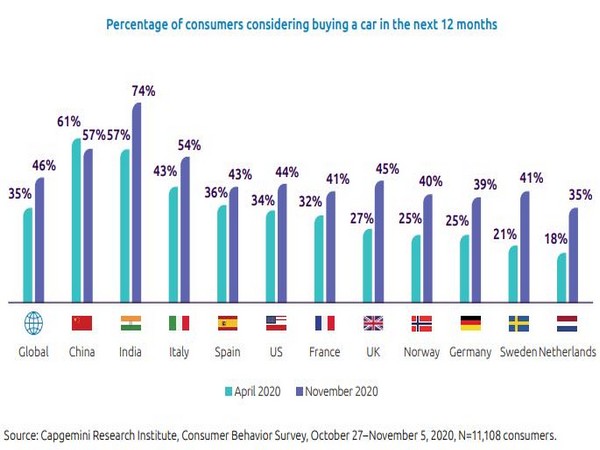

Mumbai (Maharashtra) [India], January 28 (ANI): Without a clear end to Covid-19 pandemic in sight, 87 per cent of global consumers surveyed by consulting major Capgemini have said their safety and physical well-being alongside that of their families is best served through a personal vehicle.
Nearly 81 per cent of consumers said they will avoid using car-pool services due to health and safety concerns compared with just 42 per cent in April 2020. Meanwhile, 78 per cent of consumers will opt for using their personal vehicles over taking public transport.
This shift is likely to translate into vehicle sales with almost 72 per cent of consumers stating that they value constant access to a private vehicle more than before the pandemic, according to 'Shifting gears: Covid-19 and the fast-changing automotive consumer' which assessed 11,000 consumer attitudes to buying a car across 11 countries in October and November 2020.
Almost half of global consumers (46 per cent) are considering purchasing a car in the next 12 months, an increase from 35 per cent in April 2020. "This reflects a continuous shift in consumer preference towards personal mobility, fueled by the Covid-19 pandemic as car ownership today is seen as a safeguard against the risk and spread of infection."
Purchase intent has grown globally in almost all markets and is being driven by a combination of low-cost auto loans, government incentive programmes for electric vehicles and a pent-up demand for cars following an economic recovery overlaid by the desire to avoid public and shared transport.
Younger consumers (aged 18 to 35 years) are leading the trend with 59 per cent considering purchasing a car in the next 12 months compared with 46 per cent across all age groups.
However, just over half (56 per cent) of those considering buying a car have downgraded their desires from last year with a preference for utility and functionality over the aspirational value of the car.
As a result, competition is likely to heat up in the smaller and entry-level vehicle segments as automakers push for refreshed variants of existing lines to cater to consumer interest.
In contrast, Capgemini identified a small but sizeable segment of buyers (21 per cent) willing to pay more for premium features like extra space, connected services and voice-based controls.
According to the research report, targeting this premium segment of consumers can be more profitable and help offset some margin pressure in entry-level segments.
The criteria of what makes a modern car desirable has shifted as hygiene and wellness features have assumed new importance in a span of six months.
Nearly 85 per cent of consumers today want a car that offers air filters, ambient air quality indicators, health monitoring of passengers and the use of sterilising UV LED lights, up from 49 per cent in April 2020.
The research note highlights that carmakers need to be receptive to emerging trends and include features and services that will attract the hygiene-conscious segment while still remaining attractive to price-conscious buyers.
To do so, automakers need to adapt to emerging micro-markets and provide customers with personalised offers like leasing and subscription packages.
Automakers will need to digitalise each step of the customer journey to create an omni-channel experience that establishes a direct relationship with the customer.
"The pandemic has increased consumer expectations around hygiene and wellness-related mobility features along with digitisation of vehicle sales and after-sales process. The automotive industry has to adapt to these emerging needs," said Markus Winkler, Executive Vice President for Global Automotive at Capgemini.
"While the pandemic did affect short-term automotive demand, it has accelerated critical long-term trends: digitisation, electrification and connected cars. Companies that take the lead in these areas will emerge stronger when the crisis finally recedes," he said. (ANI)


